Every morning, it already knows where you stand.
Staterunner is a small e-paper display for runners. It sits on a shelf, reads your training from Apple Health, and shows the numbers you’re chasing — this week’s kilometres, your streak, the race that’s getting closer. You never open it; you walk past it.
Expected price $149 CAD plus shipping at cost. The final price is set when the campaign opens.
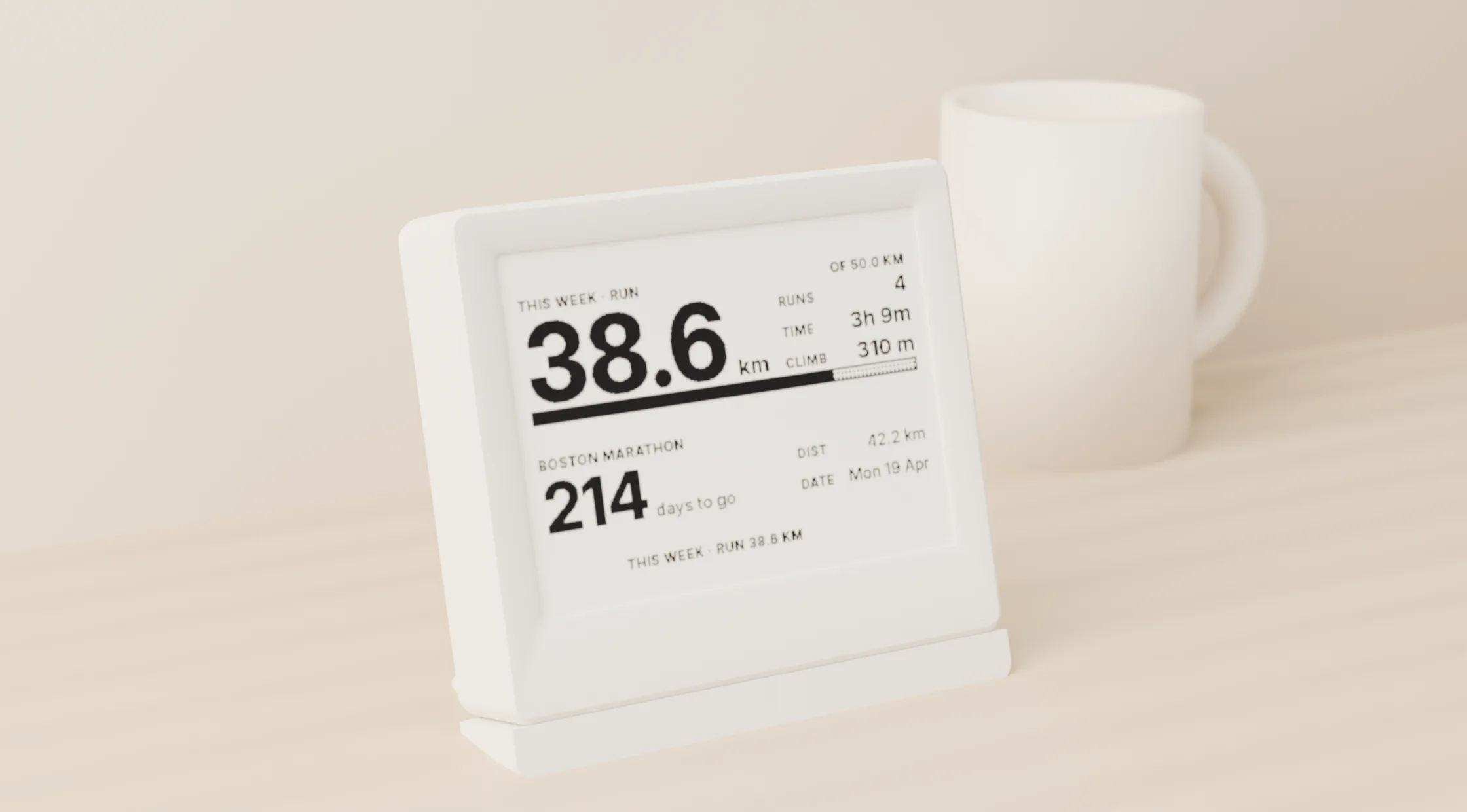
The work is happening. The seeing isn’t.
Your phone
Every run is in there. But the app only counts when you open it — and on the days you most need a nudge, you don’t.
Your watch
It answers when you raise your wrist and ask, and never volunteers.
Your shelf
A number that is simply there, in the room where your morning happens. No taps, no unlocking.
Ink that waits for you.
The screen is e-paper — the same calm surface as a reading device. It holds its image without using any power, so the number that greeted you at six is still there at midnight, and the display never glows at you from across a dark room.
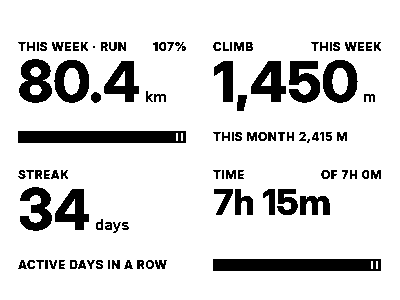
Choose from six layouts in the app. Every frame on this page is the display’s own output at its full 400 × 300, one pixel per pixel — not a drawing of one.
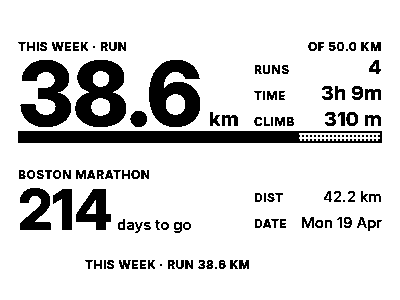
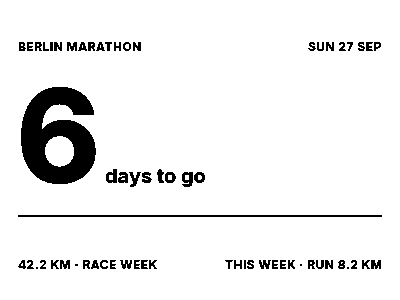
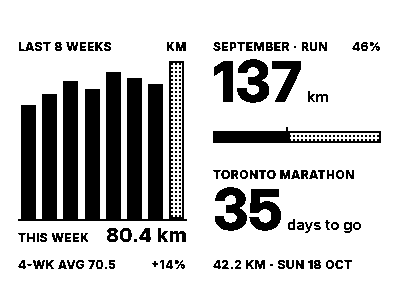
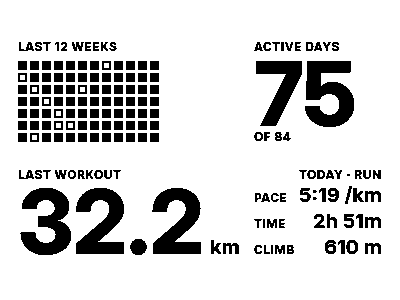
Pick a layout on your phone. The shelf follows.
Turn the display, pick a layout, and the panel redraws. It is the same list the iPhone app shows.
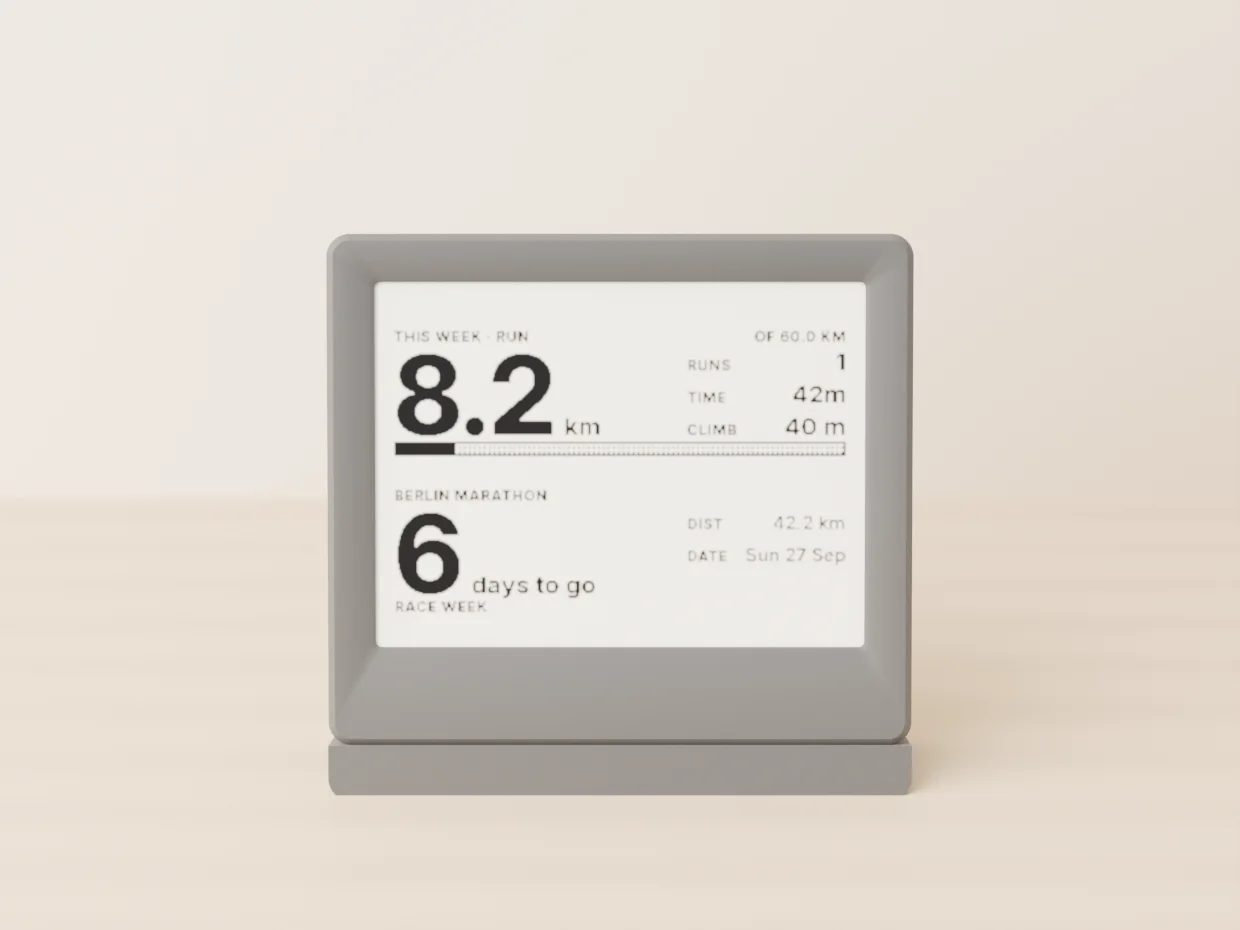
Drag to turn the display.
Kitchen
Layout · 6 in the app
The display picks up the change on its next update.
Finishes we are testing. The first run ships in one of them.
Whatever records your runs — an Apple Watch, a Garmin, Nike Run Club — writes them into Apple Health. The free iPhone app reads Apple Health and keeps the display current through the day. On battery it paces its own updates; plugged in over USB-C it stays current.
Apple Watch · Garmin · Nike Run ClubApple HealthStaterunner
iPhone only. The app is free and included.
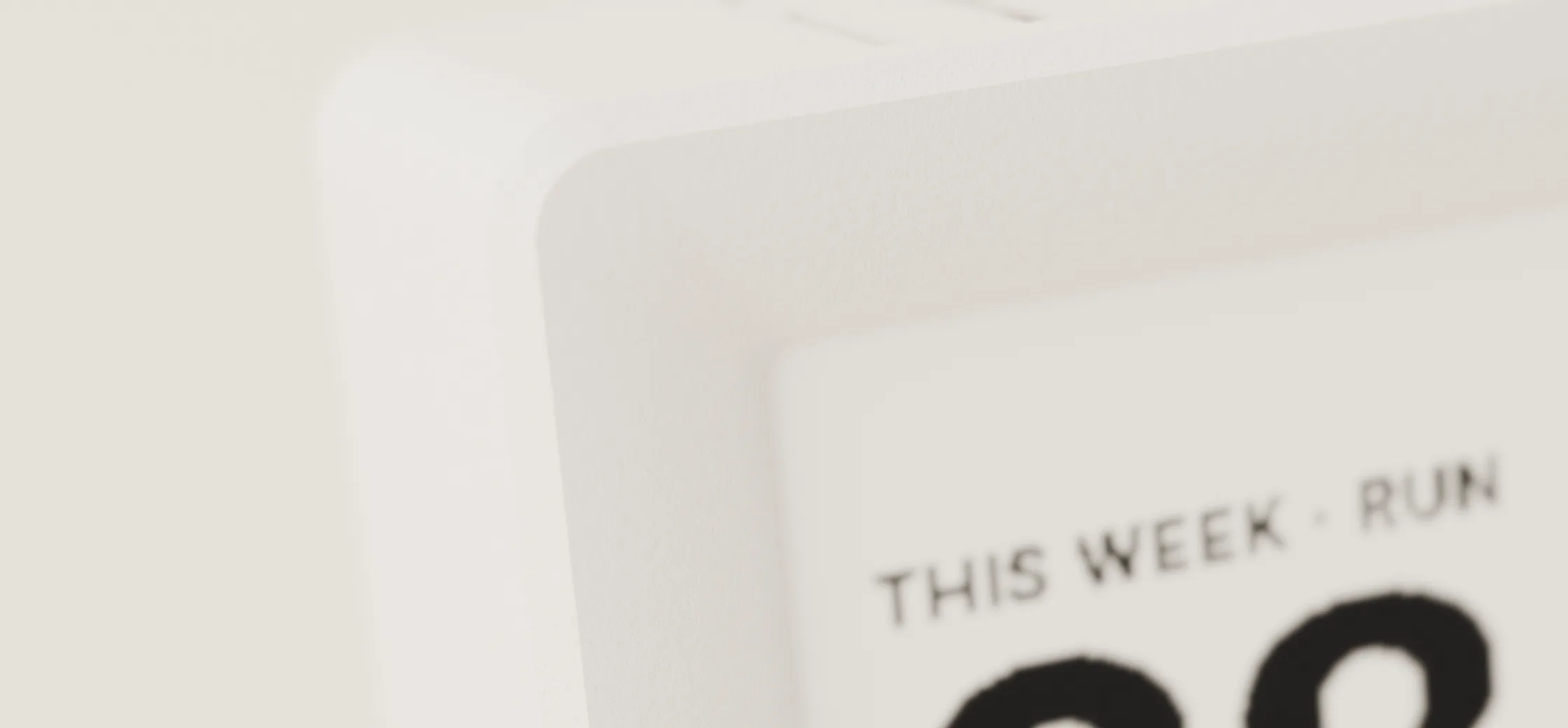
Small enough to belong anywhere.
One hundred millimetres wide, eighty-six tall — about the size of a coaster stood on its edge. The shell is warm sintered nylon with a fine matte grain that reads more like ceramic than gadget, leaned back fifteen degrees so the screen faces you on a counter or a desk.
The button and USB-C sit on the back, recessed so nothing presses by accident. Run it plugged in, or on its battery — either way the image stays put, and the room stays dark.
Built by one runner in Ontario.
Hi — I’m Aleksandr. I build Staterunner from my home office in Ontario, usually before my own morning run. The electronics on my desk already run this system every morning; the enclosure you see here is a render of the part now being made. I won’t take manufacturing money until the campaign funds it. Questions reach me directly.
— Aleksandr
How the first run happens.
Staterunner is made in batches. The waitlist shows how many people want one; a Kickstarter campaign funds the first run.
01
Join the waitlist.
An email address, nothing else. You’ll get a note when the campaign opens, and occasional build updates until then. No payment, and no place to lose.
02
Back the campaign.
Pledge on Kickstarter at the campaign price. Expected: $149 CAD, plus shipping at cost, shown before you pay.
03
The first run ships.
If the campaign funds, the first batch is made. Kickstarter charges you only if the goal is reached.
Join the waitlist
Fair questions.
- What do I need?
- An iPhone (iOS 16 or later), Apple Health, and 2.4 GHz home Wi-Fi. Anything that saves runs to Apple Health — an Apple Watch, a Garmin, Nike Run Club — reaches the display through it. There’s no Android app.
- How long does the battery last?
- Not measured on real hardware yet, so no figure is published. It runs on battery or USB-C, and the screen holds its image without power between updates.
- How often does it update?
- Plugged in, it stays current. On battery it updates when your numbers change and rests when they don’t. No single interval is promised.
- What about shipping?
- Charged at cost, shown in full before you pay. We ship from Canada.
- What if the campaign doesn’t fund?
- The first run does not happen and nobody is charged.
- I already have a watch. Why this?
- A watch is for during the run. This is for the rest of the day, when the race and the streak are in the room whether or not you think to check.
- Why is the price ‘expected, not final’?
- Manufacturing quotes are not locked yet, and promising a number now would mean breaking it later. Expected: $149 CAD. The campaign page shows the final price.
- Screen
- 4.2″ e-paper, 400×300
- Size
- 100 × 86 × 21 mm
- Power
- battery or USB-C
- Data
- Apple Health, via the free iPhone app
- Service
- included with the one-time purchase
- Made
- designed in Ontario, Canada
Device images and the clip are 3D renders of the production design; no enclosure has been made yet. The 3D model is the same enclosure geometry those renders use. Every panel image is the display renderer’s own output, drawn from a sample training log. Price, finish and dimensions are expected values, not final.